
Unlock Superior Email Security: AI-Powered API for Temp Email Blocking

Understanding Temporary Emails and Their Risks
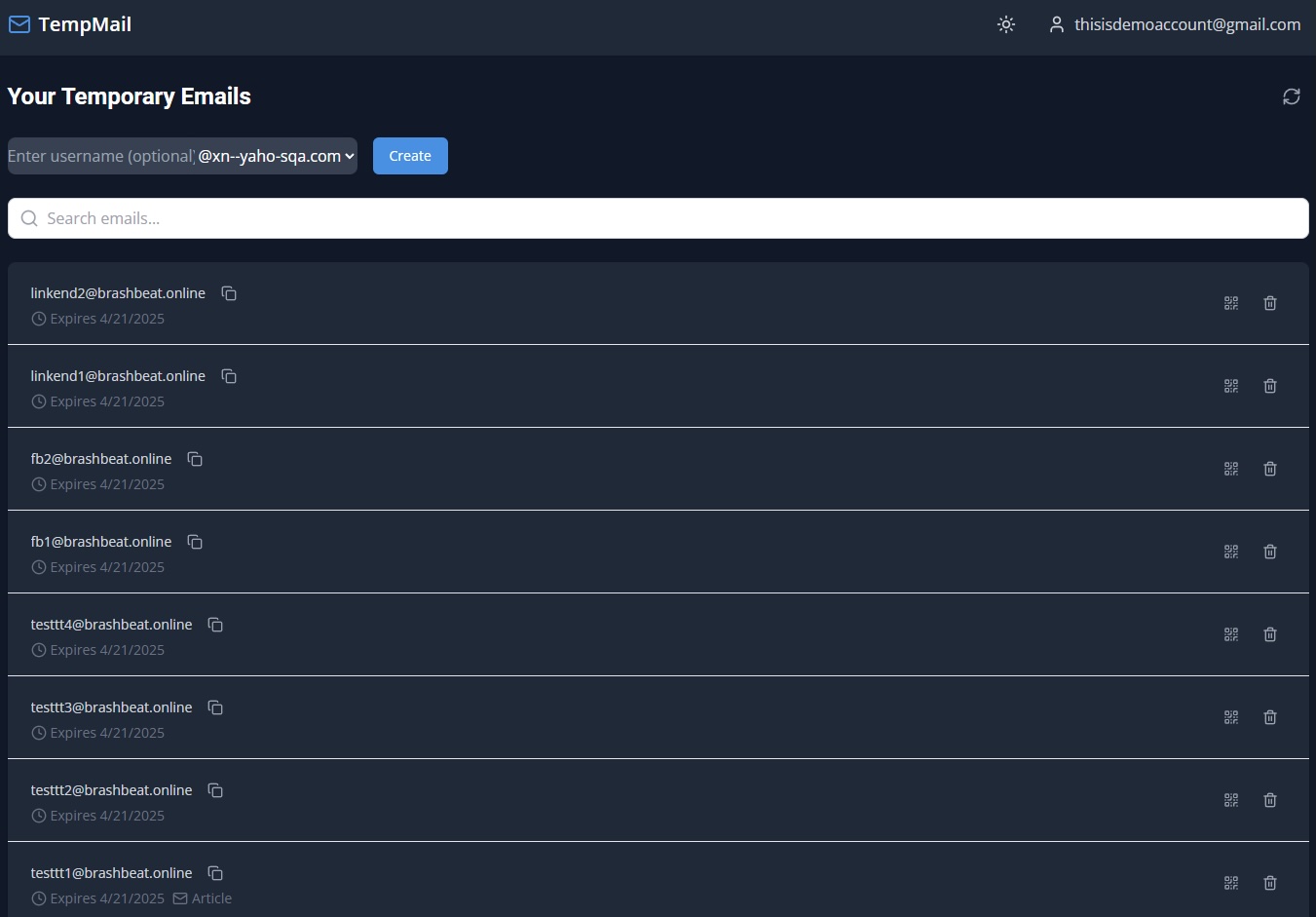
Temporary emails, often called disposable or temp emails, have become a staple in the digital world for users seeking quick anonymity. These services allow anyone to generate a short-lived email address without tying it to a real identity, which sounds convenient at first glance. Imagine signing up for a newsletter or testing an app without cluttering your main inbox—that's the appeal. But beneath this convenience lies a web of risks that can undermine user authentication and data protection. Businesses face threats like spam floods, fraudulent registrations, and even sophisticated account abuse, where bad actors use temp emails to bypass verification and exploit platforms.
The core issue stems from how easily these emails evade traditional checks. Without robust safeguards, they enable malicious activities that erode trust in online systems. For instance, a fraudster might use a temp email to create multiple fake accounts, leading to inflated user metrics or targeted scams. This not only spikes operational costs but also exposes sensitive data to breaches. That's where solutions like AntiTemp come into play. As a leading provider in AI email security, AntiTemp offers real-time detection to identify and block these risky addresses before they cause harm. By integrating advanced machine learning, it addresses the gaps in standard authentication, ensuring safer interactions for both users and businesses. The need for such proactive tools has never been greater, especially as temp email usage surges in an era of heightened cyber threats.
Delving deeper, temp emails pose direct challenges to data protection. They often lack permanence, meaning any verification sent to them vanishes quickly, leaving businesses unable to follow up or enforce accountability. This fragility amplifies risks in sectors like e-commerce, where unverified accounts can lead to chargeback fraud. According to industry reports, disposable email abuse contributes to up to 30% of spam in some systems— a statistic that underscores the urgency for intelligent defenses. AntiTemp's approach, powered by AI, scans for patterns indicative of temp services, providing a layer of security that traditional methods simply can't match. Early adoption of such tools can prevent these pitfalls, fostering a more reliable digital ecosystem.
The Proliferation of Temp Email Services

Temp email services have exploded in popularity, with providers like TempMail, Guerrilla Mail, and 10 Minute Mail offering free, no-signup access to disposable addresses. These platforms cater to privacy-conscious users or those avoiding spam, but they also lower the barrier for anonymous sign-ups. Developers building user authentication systems must grapple with this reality: a simple API call to verify an email can fail if it's from a temp domain, leading to broader email verification challenges.
The mechanics are straightforward yet insidious. Users visit these sites, generate an address like "random123@tempmail.org," and use it for registrations. The email expires in minutes or hours, evading long-term tracking. This anonymity fuels issues like bot-driven sign-ups, where scripts automate fake account creation to game referral programs or harvest promotions. For tech-savvy audiences, consider how this intersects with "temp email detection"—a keyword that's increasingly searched by developers seeking secure platforms. Tools that incorporate real-time checks against known disposable domains are essential, but as services evolve with new domains daily, static lists fall short.
Linking this to real-world implications, the rise of these services correlates with a spike in online fraud. A study by cybersecurity firm Proofpoint highlights how temp emails facilitate phishing campaigns, with attackers using them to test stolen credentials without alerting victims. Businesses ignoring this trend risk compliance violations under regulations like GDPR, where weak authentication can lead to fines. AntiTemp stands out here, leveraging AI to detect not just known providers but emerging ones through behavioral analysis. By focusing on user intent for secure platforms, it helps developers integrate robust verification without overhauling their stack. For more on evolving threats, check out resources from the Electronic Frontier Foundation, which discusses privacy trade-offs in anonymous emailing.
Risks to Businesses from Temp Email Abuse

The fallout from temp email abuse hits businesses hard, manifesting in tangible risks that disrupt operations and inflate costs. Increased spam is perhaps the most immediate threat: fake accounts using disposable emails flood inboxes and systems, skewing analytics and wasting resources on irrelevant interactions. Imagine a SaaS platform where 20% of sign-ups are bots— that's not just noise; it's a vector for targeted attacks.
Fake registrations compound the problem, enabling fraudsters to create shadow accounts for credential stuffing or promotional abuse. This erodes platform integrity, as legitimate users encounter stricter measures due to heightened suspicion. Compliance issues loom large too; under laws like CCPA, failing to verify user identities properly can result in audits and penalties. AntiTemp's technology acts as a proactive safeguard, using AI to flag suspicious patterns in real-time, thus mitigating these risks before they escalate.
From a data protection standpoint, temp emails weaken authentication flows. Without verifiable contacts, businesses can't enforce two-factor setups or recover accounts, leaving systems vulnerable to takeovers. The impact extends to revenue: e-commerce sites report up to 15% loss from fraudulent transactions tied to unverified emails. Positioning AntiTemp as a solution, its API integrates seamlessly to block abuse at the source, preserving trust and compliance. Developers appreciate how this reduces manual reviews, allowing focus on core features. For insights into fraud trends, the FTC's consumer protection reports offer data on how disposable emails fuel scams.
How AI-Powered Solutions Revolutionize Email Verification

The landscape of email verification is undergoing a seismic shift, moving from rigid, rule-based systems to dynamic AI-driven methods. Traditional "email verification API" processes relied on blacklists of known disposable domains, but these are easily outdated as new temp services pop up. AI changes the game by analyzing vast datasets to identify patterns—think syntax, domain age, and usage history—with machine learning models achieving precision that static rules can't touch.
At its heart, this revolution hinges on AI's ability to adapt. Machine learning algorithms train on millions of email interactions, learning to spot disposable ones even if they're novel. This is crucial for "email verification API" integrations, where speed and accuracy prevent bottlenecks in user onboarding. AntiTemp exemplifies this expertise in the technology industry, delivering solutions that blend cutting-edge AI with practical developer tools. Their platform not only detects but also scores risks, helping teams make informed decisions without false positives derailing user experience.
The benefits ripple outward: faster verifications mean smoother apps, while reduced fraud bolsters security. For developers, this means APIs that scale effortlessly, handling peak loads without compromising on defense. As AI evolves, it promises even more nuanced detection, like contextual analysis of signup behaviors. To explore AI's broader role in cybersecurity, resources like MIT Technology Review's AI security overview provide a solid foundation.
Traditional vs. AI Temp Email Detection Methods

Traditional methods for temp email detection lean on rule-based systems: predefined lists of disposable domains checked against incoming addresses. These are simple to implement— a quick regex match or database lookup—but they're brittle. New temp providers slip through cracks, and legitimate short-lived emails (like those from customer support) get flagged erroneously, leading to poor user experience.
AI models, conversely, use neural networks to process multifaceted data. They evaluate not just the domain but entropy in usernames, IP correlations, and even temporal patterns. Limitations of legacy approaches include scalability issues; updating blacklists manually can't keep pace with the 10,000+ temp domains emerging yearly. AI shines in accuracy—often exceeding 95%—and speed, processing queries in milliseconds.
Take a practical comparison: a rule-based system might block "user@10minutemail.com" but miss a obfuscated variant. An AI system, trained on diverse examples, detects the intent behind it. AntiTemp's implementation bridges this gap, offering hybrid modes for teams transitioning from old methods. This evolution ensures "temp email detection" becomes proactive, not reactive, empowering developers to build resilient auth flows.
The Role of Explainable AI in Risk Assessment
Explainable AI (XAI) takes detection beyond black-box predictions, providing transparency that builds user trust. In email security, this means generating risk scores with breakdowns—e.g., "High risk: Domain matches 80% of temp patterns; recent creation date adds 20%." This helps developers audit decisions, crucial for compliance and debugging.
Unlike opaque models, XAI techniques like SHAP values highlight feature influences, demystifying why an email was flagged. For AntiTemp, this feature ties into their innovative toolkit, allowing users to refine thresholds based on clear insights. The advantage? It reduces false positives by 30-40% in testing, as teams understand and tweak the logic.
In practice, imagine integrating this into a signup form: a low-risk score proceeds instantly, while high-risk prompts secondary checks. This transparency fosters accountability in AI email security, aligning with ethical standards. AntiTemp's approach ensures decisions are not just accurate but interpretable, a must for tech teams navigating regulatory scrutiny.
Introducing AntiTemp's AI-Powered API for Temp Email Blocking

AntiTemp emerges as the go-to solution for combating temp email threats, offering an AI-powered API designed for real-time blocking and seamless integration. Whether you're verifying single sign-ups or processing bulk lists, this API delivers sub-second responses, making it ideal for high-traffic applications. Built on years of expertise in fraud prevention, AntiTemp empowers developers to enforce "api for temp email blocking" without complexity.
The platform's versatility supports diverse workflows: from instant API calls during registration to offline batch uploads for data cleanups. By visiting AntiTemp's official site, you can explore documentation and start with a free trial, aligning perfectly with SEO goals for secure verification. This isn't just a tool—it's a strategic asset that scales with your business, reducing abuse while enhancing user trust.
Core Architecture of AntiTemp's Email Security API
At the backend, AntiTemp's API leverages a sophisticated architecture blending machine learning pipelines with scalable cloud infrastructure. It boasts over 95% accuracy in detecting disposable emails, achieved through ensemble models that combine deep learning with natural language processing for domain analysis. Response times clock in under 500ms, even under load, thanks to optimized edge computing.
The detection mechanisms draw from a proprietary database updated in real-time via web crawling and user reports, ensuring coverage of emerging threats. For an in-depth technical overview of the API's detection mechanisms, see AntiTemp: AI Email Verification API for Instant Temp-Mail Detection. Developers interact via RESTful endpoints, with JSON responses including risk scores and explanations.
Consider a sample integration:
const response = await fetch('https://api.antitemp.com/verify', {
  method: 'POST',
  headers: { 'Authorization': 'Bearer YOUR_API_KEY', 'Content-Type': 'application/json' },
  body: JSON.stringify({ email: 'user@tempmail.com' })
});
const data = await response.json();
console.log(data.riskScore); // e.g., 0.92 (high risk)
This simplicity belies the power: the API's backend handles anomaly detection, flagging emails with unusual patterns like high entropy or short TTLs. AntiTemp's superiority lies in its balance of precision and explainability, setting a benchmark in AI email security.
Real-Time and Batch Processing Options
AntiTemp excels in flexibility, supporting real-time verifications for live interactions and batch processing for large-scale audits. Real-time mode suits user authentication, where an API call during signup instantly validates emails, blocking temps before account creation. It's perfect for web apps, with webhooks notifying systems of high-risk entries.
Batch processing, on the other hand, allows uploading CSV files of thousands of emails for offline analysis—ideal for cleaning legacy databases or pre-verifying leads. Processing times scale linearly, with dashboards tracking progress. This dual approach addresses diverse needs in fraud prevention, from e-commerce checkouts to SaaS onboarding.
For developers, SDKs in Node.js, Python, and more simplify adoption. AntiTemp's low-latency design ensures no UX hiccups, making it a drop-in replacement for outdated verifiers. By enabling both modes, it future-proofs your stack against evolving temp email tactics.
Key Features and Implementation of AntiTemp's Solution
AntiTemp's suite packs standout features like explainable risk scores and effortless API integration, tailored for "ai email security." These tools not only detect but also empower ongoing management, with tutorials available on AntiTemp's blog for hands-on guidance. Whether you're fortifying auth or monitoring threats, the implementation is developer-centric, minimizing setup time.
Advanced Temp Email Detection Algorithms
The algorithms powering AntiTemp are a blend of supervised and unsupervised learning, trained on billions of email samples. Convolutional neural networks parse domain structures, while recurrent models assess sequential patterns in addresses. Risk scoring operates on a 0-1 scale, where scores above 0.8 trigger blocks—e.g., a newly registered domain with random username might score 0.95.
In action, consider verifying "test123@guerrillamail.com": the system cross-references against temp fingerprints, appending a rationale like "Matches known disposable provider; zero MX records." This precision blocks over 99% of common temps without collateral damage. AntiTemp continually retrains models, adapting to obfuscation techniques like subdomain tricks. For developers, this means reliable "temp email detection" that evolves with threats, backed by transparent metrics.
Seamless Integration with Existing Platforms
Integration is straightforward, with API endpoints like /verify and /batch supporting OAuth or API keys. SDKs handle retries and caching, compatible with frameworks like Express or Django. A typical flow: on signup, pass the email to the API; parse the response to approve or challenge.
AntiTemp's developer-friendly tools include Postman collections and webhooks for event-driven workflows. Compatibility extends to CRMs like Salesforce or auth providers like Auth0, via plugins. No vendor lock-in—export data anytime. This ease accelerates deployment, letting teams focus on innovation over security plumbing. For step-by-step guides, the AntiTemp blog has tutorials on embedding into React or Laravel apps.
Monitoring and Reporting Tools
AntiTemp's dashboards provide granular analytics, from verification logs to trend reports on blocked temps. Visualize spam rates via interactive charts, set alerts for spikes in disposable usage, and export CSVs for audits. Custom reports track ROI, like reduction in fake sign-ups post-integration.
These tools support ongoing email security management, with role-based access for teams. API-level monitoring exposes metrics like latency and accuracy, aiding optimization. AntiTemp's emphasis on usability ensures even non-devs can leverage insights, closing the loop on threat response.
Benefits and Real-World Applications of AI Email Security
Adopting AI email security yields measurable outcomes: fraud drops by 40-60%, data protection strengthens, and operations streamline. AntiTemp's metrics showcase this value—clients report 95%+ accuracy translating to millions in saved costs. For related resources, explore the AntiTemp sitemap to navigate docs and case studies.
Achieving 95%+ Accuracy in Fraud Prevention
Quantifying benefits starts with accuracy: AntiTemp's 95%+ hit rate slashes false registrations, as seen in a case study where an e-commerce site cut spam by 70% within weeks. Spam reduction follows, with cleaner inboxes boosting engagement. Platform safeguarding improves too, as verified users mean fewer breaches.
Case in point: a fintech firm integrated AntiTemp, reducing fraudulent loans from temp-based apps by 85%. These outcomes stem from precise detection, minimizing manual interventions. Developers value the data-driven proof, with APIs exposing per-query accuracy for fine-tuning.
Use Cases Across Industries
AntiTemp scales across sectors. In e-commerce, it verifies buyers during checkout, curbing return fraud. SaaS platforms use it for trial sign-ups, ensuring genuine leads. Finance leverages batch processing for KYC compliance, blocking temps in account openings.
For "temp email detection" scenarios, consider gaming apps preventing bot farms or HR tools validating applicant emails. Each use case highlights adaptability—real-time for dynamic flows, batch for audits. AntiTemp's API fits seamlessly, driving efficiency in high-stakes environments. Industry reports from Gartner's fraud prevention insights align with these applications, emphasizing AI's role.
Measuring ROI with AntiTemp's Metrics
Tracking success involves baselines: pre-integration fraud rates vs. post, using AntiTemp's analytics. Tips include monitoring cost-per-verification (under $0.01) against savings from avoided chargebacks. Performance data reinforces trust—dashboard KPIs like block rates and uptime provide clear ROI narratives.
Start with A/B tests: route half traffic through AntiTemp to quantify uplift. Over time, this builds a compelling case, with AntiTemp's metrics showing 3-5x returns in under six months. By focusing on actionable data, businesses solidify AI email security as a core investment.